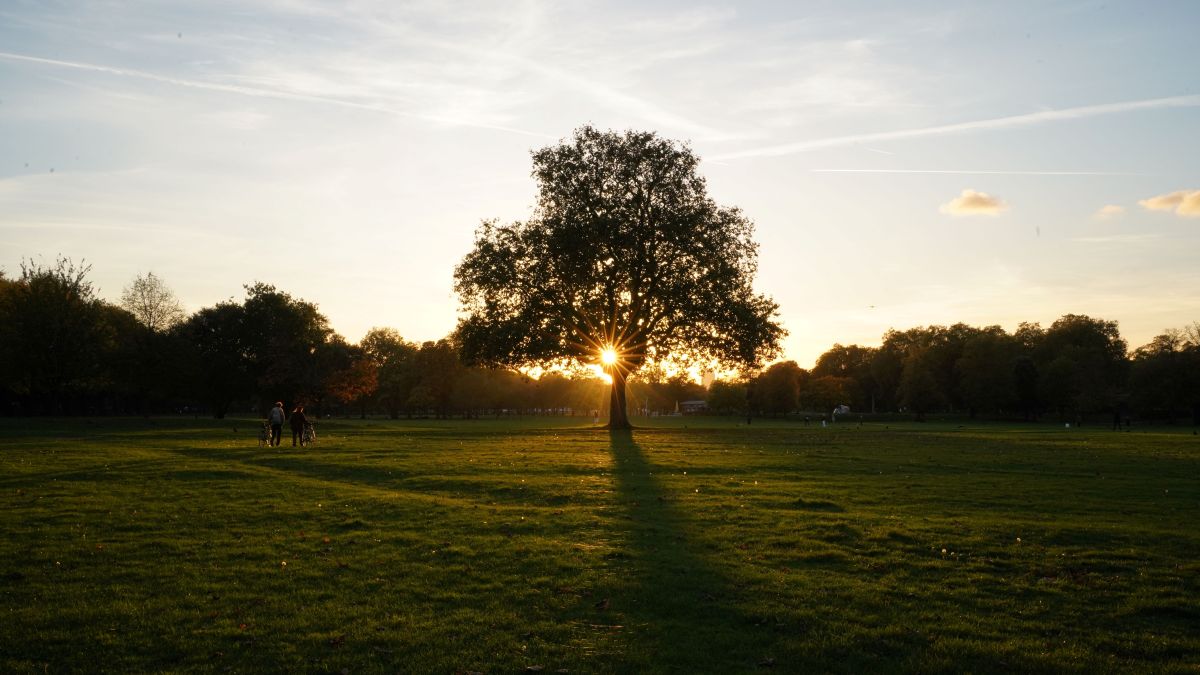
I thought it would be good to post these all out of camera, so I’ve noticed a few blemishes here and there, but prefered to leave them as is. Having impeccable optical cleanliness is a challenge in itself.
The featured image above is from East London’s Victoria Park, where I was cycling one day as the sun hung so low, and the shadows so long – I was lucky to have my camera with me and caught this. There was a quality to the light that was striking, its golden hue caught and resonating in the dandelion seed heads (Taraxacum), additional sparks in the space. The sun star adds a defining aspect but what I was conscious of wanting at the time – as well as the overall space with the depth of light, was to have the conjunction where the star would be seen as part of the body of the tree. It feels like there’s a level of honesty there, in that trees are the great drinkers of light, their bodies fed by and in that way, partly grown and made from it…
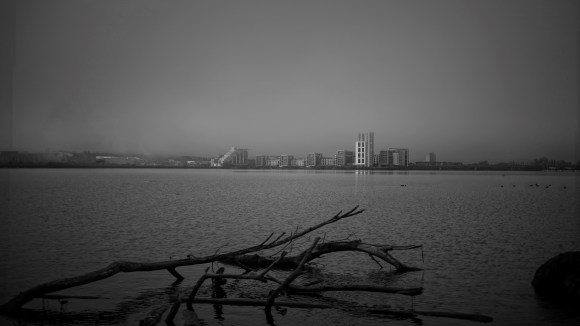
A misty Sunday morning on the Cardiff Bay barrage in winter. There were some quite unusual artifacting on some of the photos taken then (for example the dark line running down the left-hand side of this one). It made me wonder if cameras as in some way sensible entities, are also susceptible to dreaming in the fog… I just appreciated the polarities here, the half submerged tree skeleton and the blocks of architecture across the bay – wasn’t sure how the vignetting arrived either.
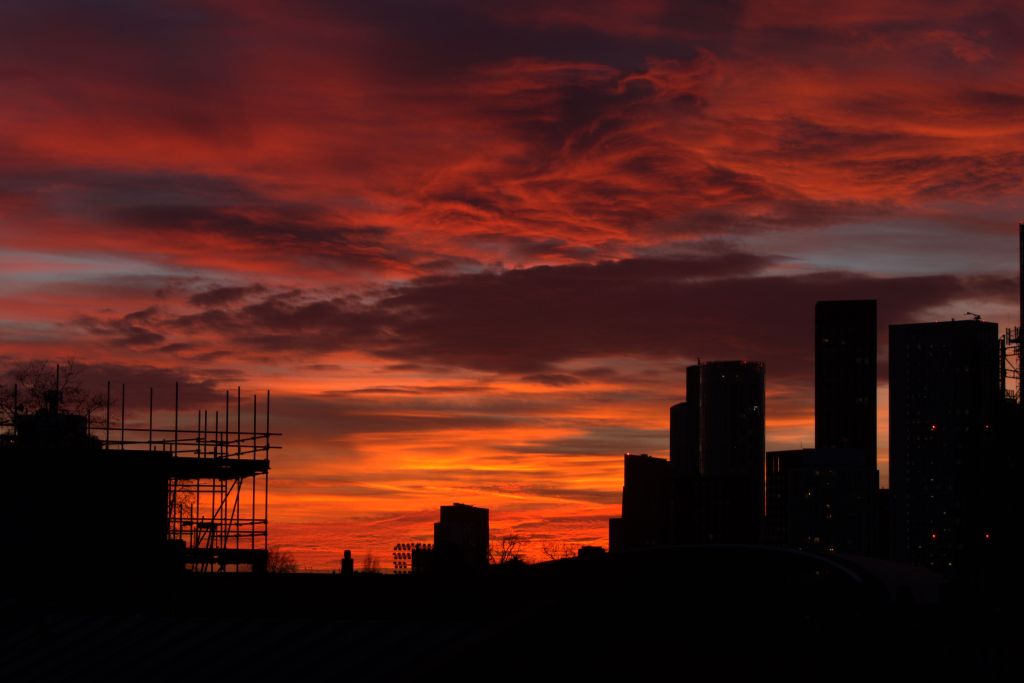
A section of skyline from Kennington in London when I happened to be on a rooftop in time for the most outrageous sunset I recall ever seeing. I had recently purchased a second hand bridge camera (the Lunix FZ2000) which has long telephoto range. As such, I was able to get some diverse shots. This zoomed-in shot was where the action was most intense and the sky most absurdly on fire – though still with so much space for blues and purples (retrospectively I was also reminded of the amazing ink-well skies of the 1980 sci-fi kitch extravaganza Flash Gordon).
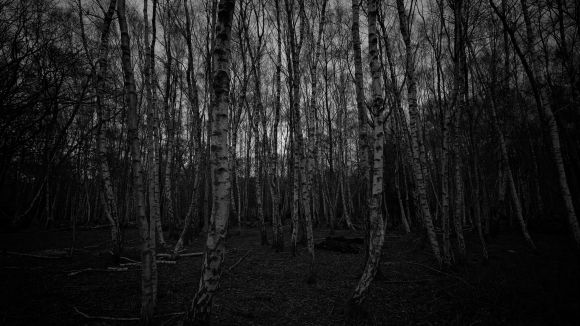
Winter 2024, there is a corner of Epping Forest on the outskirts of north east London, where an enclave of Silver Birches live. These thin bodied trees make for an amazing combination of complexity in the space – depth in the vertical is proliferated across the image, but still an amazing amount of sky is visible, a winter boon when the leaves are gone. I was also reminded of an old documentary by the retired Tory politician Michael Heseltine, where he went in search of Britain’s original Wild Wood. Amazingly no Youtube clips of this fascinating documentary exist. One of the things which Heseltine uncovered in his search was that the form of the original wildwood would have generally been tall and thin trees with higher canopies – grown fast to mitigate absences of space across the canopy.
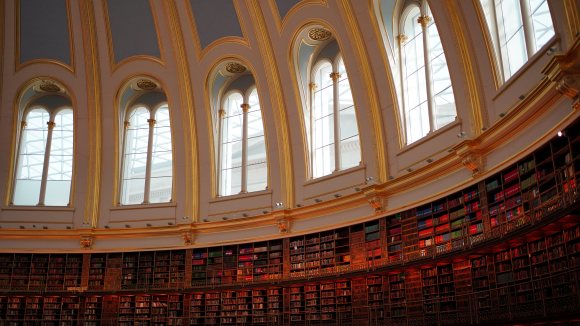
This is a view inside the British Museum Library in the center of the Museum, beneath it’s polygonal roof. I love the colour shift from the bookshelves to the dome walls, a change of depth in colour that takes on additional character when we see the books themselves, almost infinitesimal in the scale of the space. 1843 was when wood pulp was invented, since when books have predominantly been made from wood. Amazing to think we inscribe our knowledge and stories onto the transformed bodies of dead trees.
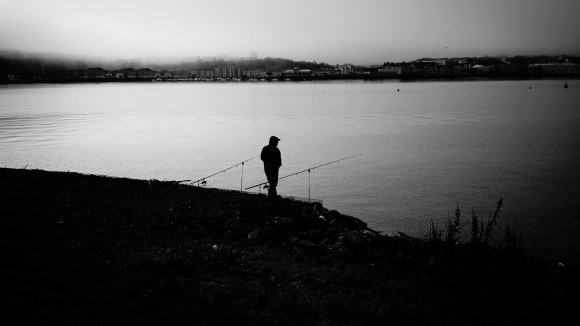
Back to that misted December day in Cardiff, enjoyable super-high contrast shot. You could definitely argue that Sony’s high contrast mode is over-cooked, but I do find it dramatic and for shots like this I think there’s an underlying power in the capacity for the frame to become more abstract in regard to the shapes and outlines taking on their significance. Still what attracts me ultimately to this image is the engagement with fishing, the patience-baited hunting, for enthusiasts – often fishing alone – solitude seems part of the experience, and a threshold-level engagement with a different realm, separated by surfaces that aspect the unknown.
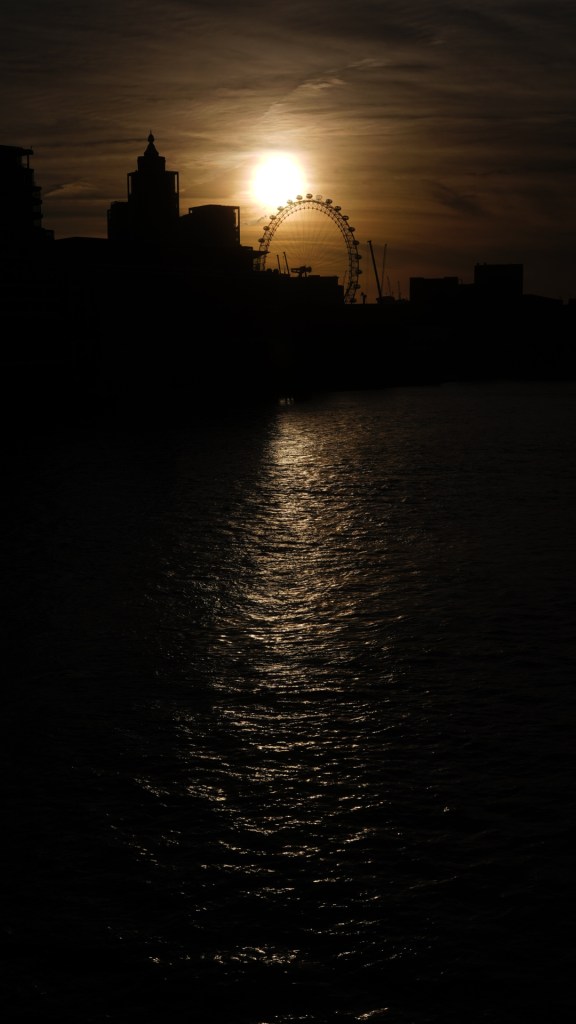
This full colour bright November daytime shot of the Thames gets to this sepia form as the last colouration from reducing the exposure to silhouette and darken everything but the brightest parts – at which point everything becomes texture. I think there is also a sense of mystery here – it is the familiar shape of part of London’s famous skyline, but so much is missing and changed (in the context of light) that the normality of this setting can become displaced.
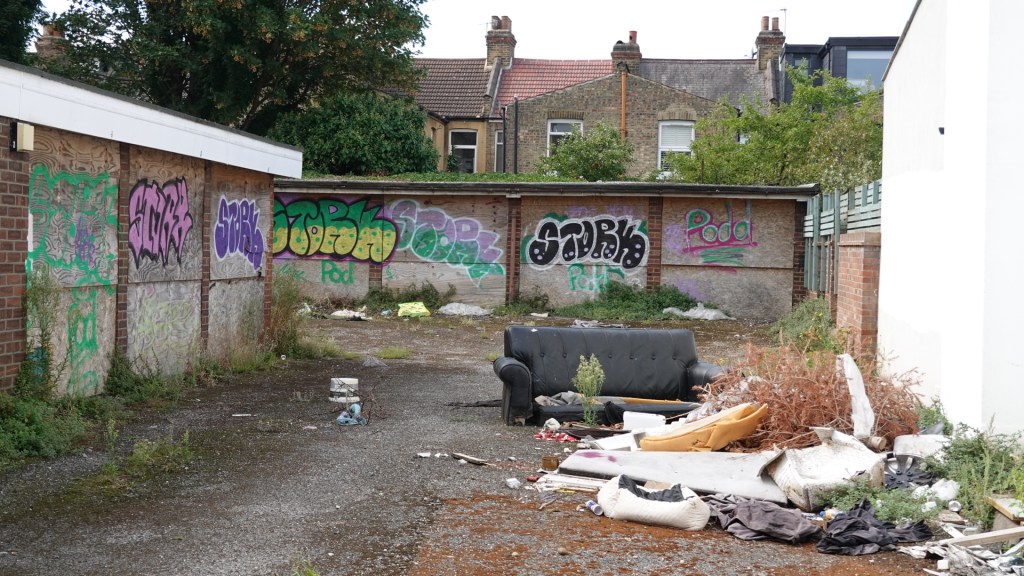
Flytipping is one of the worst of the scarrings of urbanity in our spaces (and what adjacent spaces still remain that are predominantly in the hands of nature). I recall a conversation once where someone replied to a point about nature by saying that there was no nature. It made me realise that while the names of our understandings might change, it didn’t change the forces that infused their realities.
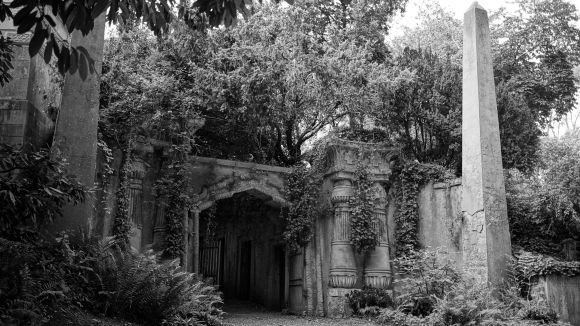
A friend took me to Highgate Cemetary in North London and told me to bring my Camera. I recalled that Karl Marx was buried there, but wasn’t prepared for some of the more ornate and dramatic tombs and monuments (including stones marking the great musician Bert Jansch and his wife Loren – Bert was involved in some brilliant music, a particular favourite of mine being No Love Is Sorrow by Pentangle, performed with astonishing loveliness from 1972 here). This catacomb entrance I found especially remarkable, suddenly emerging as one walks around the cemetary – like a junction with the neolithic.
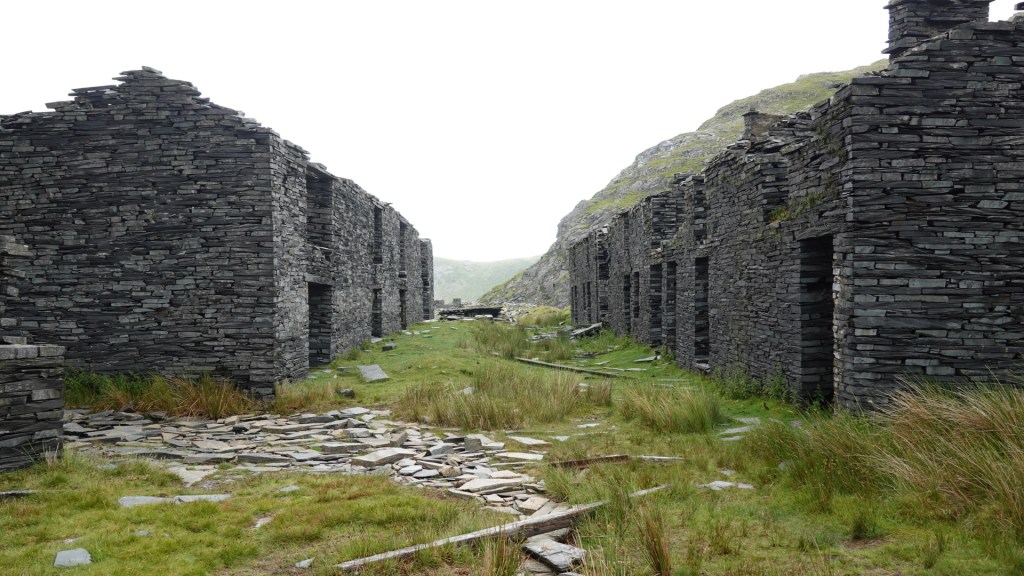
At the end of a June hike for three days over Cnicht and into Eryri, an amazing surprise as the mist cleared some, revealing the ruins of the old Rhosydd slate quarry. A more ghostly circumstance is difficult to imagine, whisps of fog clinging the background, these solid but empty shells signalling the retreat of human organisation from the mountain, only these skeletons and their visitors remaining.
* * *

