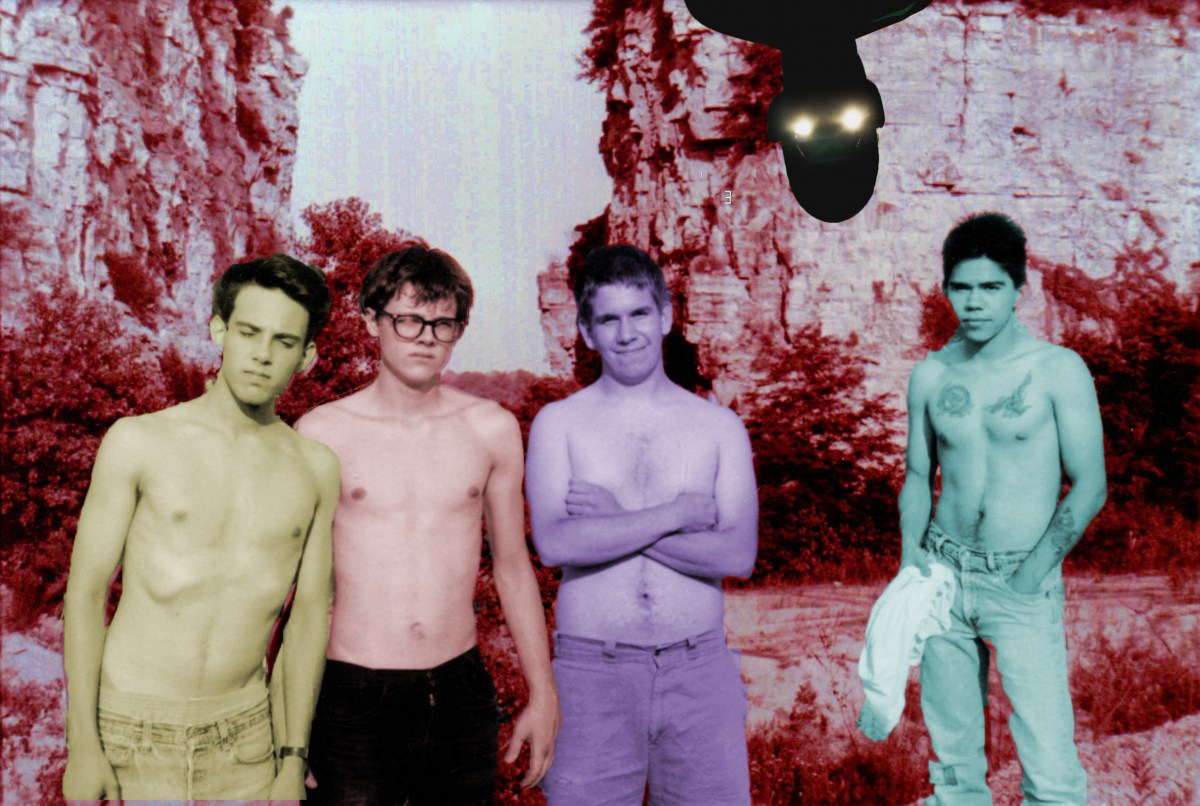
Recently came across this excellent recording from 2005 of Slint playing their song Don, Aman live (video below). I’ve written before about Slint and the 2014 documentary Breadcrumb Trail by Lance Bangs that charts their formation and the production of their stunning 1991 album Spiderland, following which they (mostly) disbanded.
After finishing that piece I hadn’t really considered having much more to say about Slint, they had blown open a space through which some amazing music and musicians have followed, while there has been no new music released by them under that name since that I am aware of. This alone maintains Slint and Spiderland as the end point of a trajectory which had the effect of opening a space of musical expression, significantly impactful especially in its role as a precursor of what has become the genre of post-rock. There are many of us who would love to hear new music from them, but as it is they helped detonate a space and left it completely open.
Cryptic edges
Still, I felt something nagging after writing that piece, fractionally haunted by a sentence that had emerged from listening specifically to Don, Aman. ‘Let this song into your heart and it will take you to extraordinary places‘.
So when I found the live version one of the things that became apparent was just how much the song has a kind of mystery to it, and that in narrative terms, taps into something running through our social worlds and yet appears at the same time, to reach out past them. At a certain point I also realised it could be drawn in a parallel with one of the more liminal-real moments of international cinema since the millennium – the Leos Carax directed French film Holy Motors from 2012 (further below).
*
Don stepped outside
It felt good to be alone
He wished he was drunk
He thought about something he said
And how stupid it had sounded
He should forget about it
He decided to piss, but he couldn’t
(A plane passes silently overhead)The streetlights, and the buds on the trees, and the night, were still
It finally came, he took a deep breath
It made him feel strong, and determined
To go back insideThe light
Their backs
The conversations
The couples, romancing, so natural
His friends stare
With eyes like the heads of nails
The others
Glances
With amusement
With evasion
With contempt
So distant
With malice
For being a sty in their engagement
Like swimming underwater in the darkness
Like walking through an empty house
Speaking to an imaginary audienceAnd being watched from outside by
A soul without a keyHe could not dance to anything
Don left
And drove
And howled
And laughed
At himself
He felt he knew what that wasDon woke up
Don, Aman by Slint (words Britt Walford / Bryan McMahan) source
And looked at the night before
He knew what he had to do
He was responsible
In the mirror
He saw his friend
*
Sonically Don, Aman is interesting in terms of the mesmerism of a lot of Spiderland’s riffing, interlocking construction. Primarily a single refraining progression in stages, played by two guitars simultaneously – not so much the interlocking pendula used on other songs, but a step for step duality. As the narrative develops, Don has been in the garden taking a piss, having left the party under some cloud incurred to him as a social anxiety.
He thought about something he said
Don, Aman
And how stupid it had sounded
The music conveys a poised tension both in Don’s initial musings in the garden and subsequently, the musical transition accompanying Don’s return to the party becomes fast and pulsating – with an air of menace – and speaks of a real change in space (in terms of the song, from the solitude of the outside to the interiorised sociality of the party). The rhythm of the narrative telling is also changed, clipped and stroboscopic. There is a story in the music itself, its form as a sonic impact – tones, speed and relationships, atmosphere – (its adherence to) the sense of necessity within its complete structure. It becomes clearer that there is a sonic autonomy as well as a narrative autonomy – both connected and fundamental to each other – at the end of the first narrative section, the story element resolves (Don will go back inside) – but the spoken story must wait for the musical one to also complete a few bars later before it can all move on again.
It is a form of engagement, of storytelling and its meanings, one of which’s gifts is to take us through the trajectories of the socium, its tensile quality of reverted judgment (“His friends stared…with eyes like the heads of nails…”), through the strata of consciousness – to where a different kind of sensation is at work. That of the unknown-as-watcher and yet crucially in this context – the song’s final movement is one of recognition and becoming.
*
The next step to consider is that of Mark Fisher’s work with the eerie, there is an eerieness at work in the distended balance and affect of Don, Aman, it is precisely that beguiling stillness in the midst of a storm that Mark (and his collaborator Justin Barton) once alluded to out of the ordinary ‘you can have an eerie experience in the middle of a packed underground train.’ (I went into this more specifically here).
But this is also because I think Mark’s identification of the eerie as being to do with agency in the unknown is significant here. The incompleteness to both presence and absence, agency and life (or unlife).
*
Mystery, Mesmer, Dysjunctions

Early on I mentioned that there had been a couple of things that had caught my attention with the discovery of this live recording of Don, Aman. The second being that until I had listened to this version, it seems I had no memory – despite listening dozens and dozens of times, that it doesn’t have drums. I had the sense of its structure, but at the same time, what I was really being aware of, was how mysterious it had managed to remain to me and how remarkable that felt. Adjoining which the idea that it is a kind of sonic mesmerism – a hypnifying plateau that takes us through a spectrum of experience in a personalised, social world. As part of Don’s experiences within the feedback maelstroms of the social – the relations and emergent relations – the attitudes and angles of intent and feeling of individuals and groups, their strands of conception and acceptances and rejections. Their interiorities and enforcements. Their lines of flight and transformation and love. Thrown in there at this key moment of social dysjunction which has pushed Don outside (both literally and figuratively) – is this potentially doubled aspect of alterity, being the ‘imaginary audience‘ and the unknown watcher.
Like swimming underwater in the darkness
Don Aman, Slint
Like walking through an empty house
Speaking to an imaginary audience
However we consider this – there is an aspect of the idea also functioning as a kind of reflected ‘othering’ of our consciousness in terms of a generally pre-judged ongoing sense of receiving judgement (and generally in terms of human subjectification) in what acts as a way of closing down and inhibiting directions and becomings (a reactive impact which can continue in this vein even as versions of approval and adulation). From this (and with this in mind) it is important to remember that Don extricates himself from this particular instance of self-social infliction during the song, he overcomes the feedback at ontological conformance or rejection.
In the timing and setting of these anomalous aspects of the narrative, as well as being aligned with Holy Motors (as we’ll go into) there is almost something of David Lynch in the story turn. That it is at the point of social dysfunction or rupture – that Don’s story moves to include this presence outside the accessibility of the normal human-perceptual and of its corresponding, attending sense of the real. There is something of Twin Peaks or Lost Highway in this presentation of the unknown agency in some ways extrinsic but connected ontologically to human life, but also to human social transactionality.
…And being watched from outside by
Don, Aman
Someone (a soul without a key)
*
Energetic States
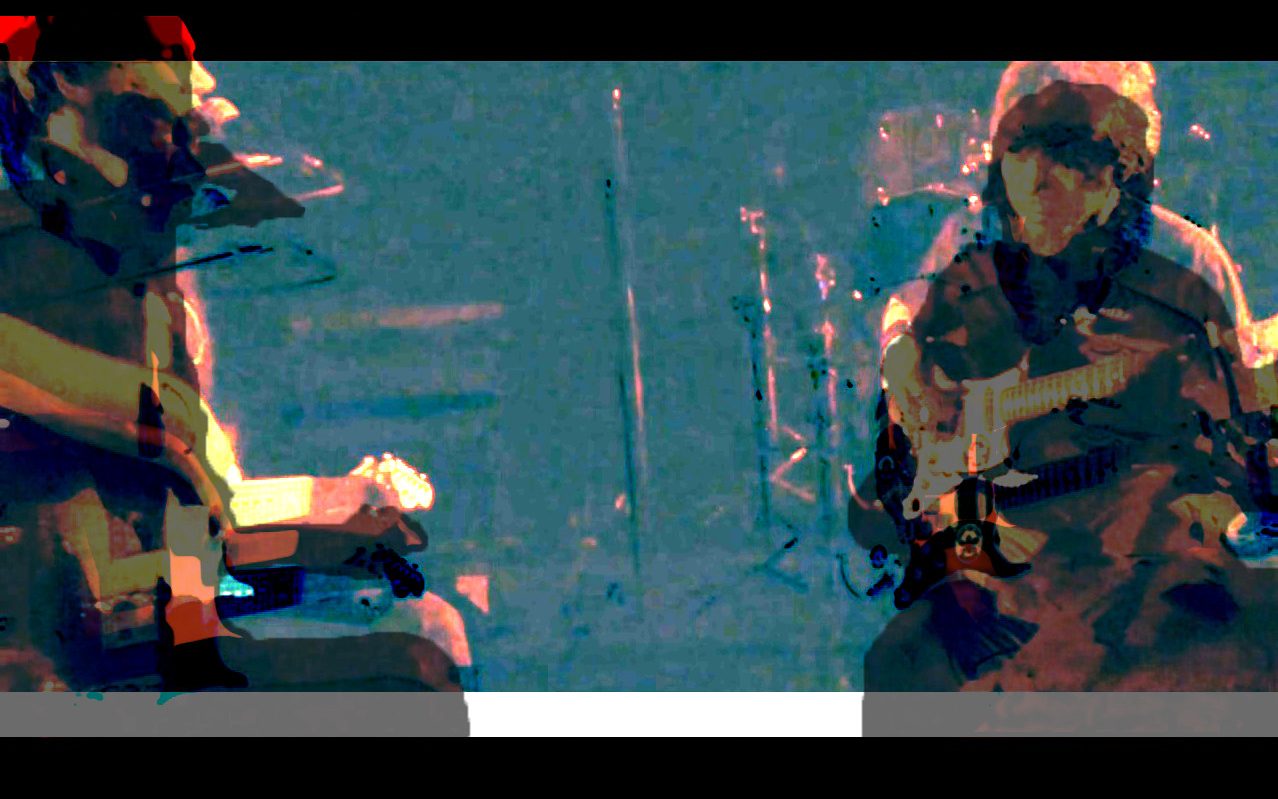
So while the narrative begins with Don recovering from the imposition of some kind of social error and its repercussions, it is also crucially the story of Don overcoming the emergent feedback from the circumstances of the ‘error’. During the course of the song, he arrives at an insight, an energy release takes place (Blake’s ‘Energy is eternal delight‘).
“Don left and drove and howled and laughed, at himself; he felt he knew what that was”
Don, Aman
Don, howling and laughing is freed now of the reactivity (/wound) from the previous form of the feedback / social transaction, it is inert or ineffectual in some way becoming known to him ‘he felt he knew what that was…’.
As much therefore as Don, Aman is taking us into the cloying heart of an internment in consciousness, it is also the story of a threshold being crossed. In the morning, as he faces up to himself – Don finds responsibility and a form of peace. A specific modification of his being, or his approach. The moment in song that Don, in the morning has changed understanding – is also the moment that the song changes mode once more as the guitars go from their chiming clean metallic sound and become distorted (‘he felt he knew what that was…’).
We may not ‘see it’ (or be told) but the guitar distortion, alone and unbacked – is almost a lone visitation in the song – a breaking of the tense chiming, clean-toned clanging repetitions. Except at the very end of the song when we hear it again, as the chords that have held everything wind down, this motif visits once more, distorted fast riffing – a reminder like a wind from the other side – an ostensibly higher-energy sonic mode. As if Walford, McMahan et al. are aware that it cannot be left on that untransformed grounding that expresses most of Don’s story. Instead, they fade in this remembrance of the void, the breakthrough – as what we must be left with.
In the song, instead of being reduced by his experiences, Don emerges through what has dimension of a warrior-struggle of variances in intensity; through the apertures of emergent collective forces that run through unknown wavelengths. And it is here in this part alien-ness to what shapes human social dimension and its proclivities and libidinalities that there is matter to be retrieved from both Slint’s and Carax’s work.
* *
Holy Motors

It’s been a process of some years thinking about and occasionally re-watching Carax’s film from 2012.
In executing the film, Carax steps outside normal depictions of the real to navigate its precise structuring along lines that draw the same threads of agency beyond the ordinary (in a way that takes us back to Fisher). The same thread of an audience is then applied, much as Slint give us with Don, Aman – the audience is again mostly absent (‘Speaking to an imaginary audience… And being watched from outside…‘), except perhaps at its very beginning when the film’s protagonist Mr Oscar wanders through the sleeping (and thereby in some way absented) audience of a cinema. However emissaries and representations of ‘the audience’ abound in the film – with references to their likes and dislikes, their tolerances and intolerances – the importance of meeting their expectations in some way always clear and eminent. Absent, but plugged in.
In the film’s story, we are following Mr Oscar (played by Carax collaborator Denis Lavant) as he takes up episodic roles (‘appointments’) slotting in and becoming others in various scenes of their lives that comprise a range of often dramatic events, frequently involving different forms of judgment and social castigation or modes of capture. One of the very first engagements is to undertake a full gymnastic and martial arts motion capture sequence that then veers off into Mr Oscar and a female artist (also in motion capture suit), animating two snake-like beings in a sensual, sexual engagement together. While one of the more on the nose appointments, involves Mr. Oscar becoming the troll-like Mr. Merde, who kidnaps to the sewers a photoshoot model played by Eva Mendez (photo below).

The Read
It feels like there is a directly available analogue to this story about the arts, specifically in terms of filmmaking and acting. A flattening out of the idea of filmic (or thespian) story-telling wherein the actors are depicted to really become these characters of their performance, who are themselves real, alive and connected. Their lives are seemlessly entered by Mr Oscar (and others) who deliver their scenes absolutely while remaining ever unconnected to the absent audience, a gap that can never be bridged; absent and untouchable arbiters whose mores and whims decide the trajectory for these actors, lighting or crushing the potential to continue entering their worlds of transformation and performance.
This I feel, would be the most direct correlate in reaching through the film for any kind of underlying parallel. Yet for me, the film is most powerful when flattened out entirely onto a single plane of realism – where rather than attribute the role of Mr Oscar so obviously as an actor – there is instead the idea of ‘Holy Motors‘ as humans being susceptible to transient agencies of control, takeover and interruption. More powerful still in just how often these performances, and the interloping Mr Oscar seem to be arriving to ensure specficially that whatever else takes place in the scene; reactivities dominate openings and that in this regard, momentum or energy are stopped or intercepted – while somehow this also entails that ‘the show goes on’ in some dark balance of outcomes. In fact, other than the fluency and freedom that Mr Oscar demonstrates in becoming his characters, very little else of freedom or fluency finding a way, is present.
It was in conversation with Justin Barton many years ago, shortly after watching Holy Motors together, that he made the observation about an exchange early on in the film, as Mr Oscar is being briefed on his appointments for the day, he asks if any will be in the forest. As he is told no, we see that in story terms that is the line of flight in the film – the space to which Mr. Oscar is drawn and wishes to return, but must instead conduct his performances in the urban and its environs.
*
Returning for a moment to the Slint song, this also locates a key difference between Don, Aman and Holy Motors (perhaps the key difference). In the episodic nature of the latter’s appointments – one could almost imagine Don, Aman being one of those situations into which the tranformative Mr. Oscar arrives – to ensure maximum dramatic incursion and yet in Slint’s narrative, Don turns the moment into a component of passage – an understanding of new dynamics and vectors; the release of energy and more lucidly attuned perception.
‘Don left, and drove and howled and laughed, at himself, he felt he knew what that was…’
*
More recently still, I couldn’t help but think about these two pieces of work and their allusions, while also considering David Bowie’s ‘Life on Mars’. It brought to mind that this may also have been something Bowie was considering when he wrote of the sailors, fighting in the dance hall and being in the ‘best selling show’. Followed up with the eponymous in question form ‘Is there life on Mars’?
*
Audient Self
There is still another way of thinking about this tableau, that we as human beings are so generally alienated from ourselves that we are in some way also an absent audience. Perhaps this idea can be accessed from one direction by thinking of the example given in the Carlos Castaneda book The Active Side of Infinity. In which the character of Don Juan extracts from Castaneda’s life a series of stories he says have a deeper significance.
The first of these involve a younger Castaneda watching the dance of a prostitute which involves her spinning and dancing before a mirror.
“You see, like Madame Ludmilla, every one of us, young and old alike, is making figures in front of a mirror in one way or another. Tally what you know about people. Think of any human being on this earth, and you will know, without the shadow of a doubt, that no matter who they are, or what they think of themselves, or what they do, the result of their actions is always the same: senseless figures in front of a mirror.”
Juan Matus (The Active Side of Infinity)
From the Castaneda story we could also talk about the notion of a self reflectant image of our being, against which we are constantly measuring, redressing and consoling ourselves. A composed idea of a reflection that does not involve directly acknowledging or understanding the existence of this element of our self-perception. A knowing unknowing that casts across to a memorable line from The Strokes’ Julian Casablancas, from his 2009 solo album Phrazes For The Young and the track 11th Dimension (below).
‘You are looking for your voice, but in others – while it hears you, trapped in another dimension’.
11th Dimension, Julian Casablancas
*
There is a parallel here too with the conscious absence of our sense of connection with what might be another aspect of our consciousness. I have referenced before Timothy Levitch’s excellent section of Richard Linklater’s film Waking Life (2001).
‘Knowing that you are a dream figure, in another person’s dream… that is self awareness’
A human understanding of the circumstances of dreaming has been badly attenuated, under attack simultaneously from the interpretative onslaught of psychiatric/psychology assemblage and from the hegemonic dominance of reason as a faculty dominantly entwined with both epistemology and ontology. That is to say that there is little space for dreaming as an affective and equivalent dimension in reality. As Timothy Levitch also quoted Lorca in Waking Life ‘No one sleeps, no one no one, no one sleeps…‘ Always suggesting, and reaching past the corners of our deadened recepticles of the deep habit of perceiving and of the conditional states of cognitive function. That a more connective and complete awareness of ourselves remains, to be fostered, awoken, dawned like Don’s breakthrough that left him howling and laughing in the joy of realising transformation and an escape from the wounds of reactive judgement, a joy in itself.
***
 reflectivewavelengths